.png)
Concrete Coatings
Transform your garage floor, patio, basement, or commercial space with durable epoxy, polyaspartic, and decorative concrete coatings. Free quotes from vetted local contractors. No obligation.
Find My ProConcrete coatings transform tired, stained, or cracked concrete into a beautiful, durable, easy-to-clean surface that lasts 15–20 years or more. Epoxy and polyaspartic floor coatings resist oil, chemicals, road salt, and impact damage that would destroy bare concrete. They also dramatically improve a garage, basement, or patio's look, often as much as a full remodel for a fraction of the cost.
Whether you want a high-gloss showroom finish in your garage, a slip-resistant pool deck coating, a decorative basement floor, or a tough industrial coating for a workshop, professional concrete coating services ensure proper surface prep, application, and warranty coverage. The right coating saves you thousands in concrete replacement down the road and turns underused spaces into rooms you actually want to spend time in.
Services
From single-bay garage epoxy floors to whole-property decorative concrete, find the coating service that fits your space.
Epoxy or polyaspartic floor coating for a 2-car or 3-car garage. Includes surface grinding, crack repair, base coat, flake broadcast, and clear top coat. Most installs finish in 1–2 days. Range $1,500–$4,000.
Slip-resistant decorative coatings for patios, pool decks, and walkways. UV-stable colors that won't fade. Includes pressure washing, crack repair, and 2–3 coats. Range $2,000–$6,000.
Epoxy coating with moisture barrier for finished or unfinished basements. Transforms a damp dingy space into a usable room. Includes any necessary crack and slope repair. Range $2,000–$5,000.
Multi-area coatings covering garage, basement, and outdoor concrete. Heavy-duty industrial-grade options for workshops, breweries, and commercial spaces. Range $5,000–$15,000+.
System Guide
Six core systems dominate the U.S. concrete coating market in 2026. The right pick depends on UV exposure, install time, durability needs, and budget. Here's how they compare.
A UV-stable, chemical-resistant coating that cures in 2–4 hours and is walkable the same day. Driveable in 24 hours. Best for garage floors, patios, and anyone who can't lose the space for a week. Lasts 15–20 years. Cost: $7–$12 per sq ft installed.
The original concrete coating. Hardens to a glossy finish, available in solid colors or with decorative flakes. UV-sensitive (yellows in direct sunlight), so best for indoor garages, basements, and workshops. 5–7 day cure. Lasts 10–15 years indoors. Cost: $3–$7 per sq ft installed.
Flexible, abrasion-resistant, and three times stronger than epoxy. Stays flexible at low temperatures so it won't crack in freeze-thaw climates. Best for commercial garages, repair shops, and outdoor concrete in northern states. Cost: $5–$10 per sq ft installed. Often paired with a polyaspartic topcoat.
Acid or water-based stains penetrate the concrete, then a topcoat seals it. Translucent, mottled "natural" look. Best for stamped patios, basement floors, and where you want to show the concrete texture. Lasts 3–7 years before resealing. Cost: $2–$5 per sq ft.
A thin layer of polymer-modified concrete troweled over existing concrete. Can be stamped, stained, or scored to mimic tile, brick, or flagstone. Best when concrete is structurally sound but visually past its life. Lasts 10–15 years. Cost: $7–$15 per sq ft.
A clear penetrating sealer that protects against water, oil, and salt without changing the look. Best for new exterior concrete (driveways, sidewalks), where you want stain protection but no color or sheen. Reapply every 2–3 years. Cost: $0.50–$2 per sq ft.
Cost Guide
Concrete coating costs vary by surface area, coating type (epoxy vs polyaspartic), and prep work required. Here's what to budget per project type.
Standard epoxy floor coating for garages and basements. Includes grinding, primer, base coat, decorative chip flakes, and clear topcoat. Cures in 24–72 hours. Most popular budget option.
Premium 1-day install. Cures in hours, UV-resistant, more flexible than epoxy. The standard for residential garages in cold climates. Lasts 15–20+ years with minimal maintenance.
Stained, stamped, or metallic decorative concrete coatings. Custom colors and patterns. Often used in basements, sunrooms, and high-end patios where appearance matters.
Heavy-duty coatings for workshops, breweries, and commercial spaces. Chemical-resistant, antimicrobial, ESD options. Includes detailed surface prep and multiple coats.
Prices shown are estimates for planning purposes only and do not represent a final price. Your actual cost depends on project scope, materials, and your local market.
What to expect
A typical residential concrete coating job takes 1–2 days from start to finish. Prep is 70% of the work; coating itself is the easy part.
An installer inspects the slab for cracks, spalling, oil stains, and moisture. A calcium chloride moisture test measures vapor emission; readings above 3 lbs / 1,000 sq ft / 24hr disqualify epoxy and most polyaspartics. The slab must be at least 28 days old before coating. Free for most contractors.
Skip this and the coating peels in 1–2 years. Installers use planetary grinders with diamond tooling to remove old sealers, etch the surface, and open the concrete pores so the new coating can mechanically bond. Acid etching alone is NOT enough for high-traffic garage floors and is considered an industry shortcut.
Cracks wider than a hairline are routed out, vacuumed clean, and filled with a polyurea joint sealant that flexes with the slab. Spalled or pitted areas are patched with a polymer-modified concrete repair compound. Skipping this lets cracks telegraph through the coating within months.
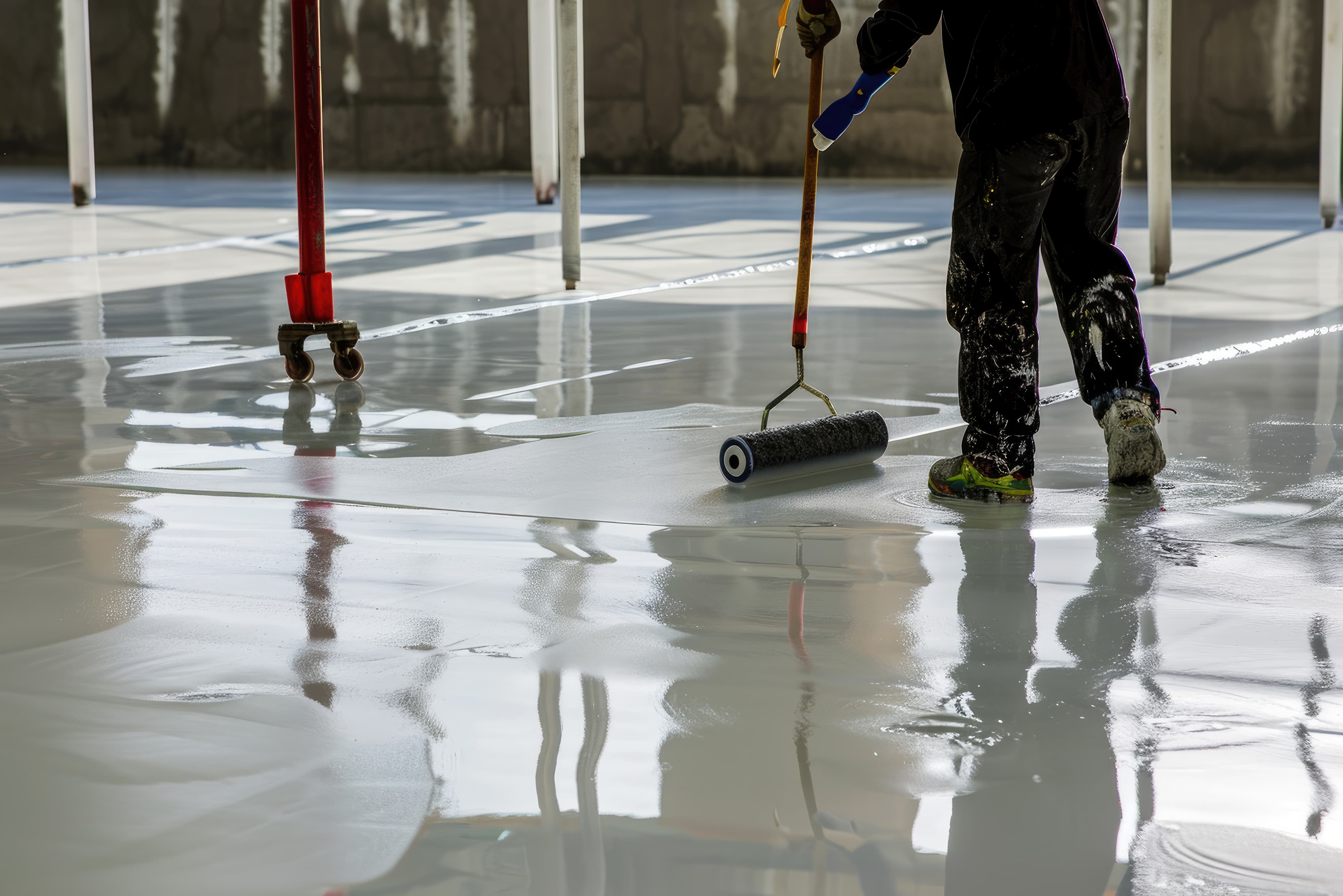
The base coat (epoxy, polyurea, or pigmented polyaspartic) is rolled across the floor. While wet, decorative vinyl flakes are broadcast by hand to refusal (full saturation). After 1–2 hours the floor is scraped to remove loose flakes and sharp edges, leaving a level, textured surface.
A clear polyaspartic topcoat seals the flake bed, adds UV protection, and creates the wear surface. Walkable in 4 hours, light foot traffic in 24, full chemical resistance in 7 days. Reputable installers offer a 10–15 year warranty against delamination and a 1-year touch-up guarantee.
Moisture & Slab Prep
Moisture failure is the single biggest cause of coating delamination in residential concrete. Most homeowners who call a contractor with a peeling floor are not seeing a bad coating; they are seeing a coating that was applied over a slab that was actively pushing water vapor up through the surface. No coating, no matter how premium, can survive that.
A professional installer measures Moisture Vapor Emission Rate (MVER) before quoting the job, using a calcium chloride dome test or an in-situ relative humidity probe. The industry threshold is 3 pounds of moisture per 1,000 square feet of concrete over 24 hours. Slabs reading above 3 pounds disqualify epoxy and most polyaspartics; slabs above 6 pounds need a vapor barrier primer or a moisture-mitigating base coat before any decorative system can go down.
If your installer skips this test and proposes coating your basement, slab-on-grade garage, or any below-grade concrete without checking moisture first, walk away. The repair cost when a moisture-driven failure happens twelve months later is typically larger than the original install. Reputable contractors include moisture testing in their assessment at no extra charge and document the reading in your written quote. Ask to see it.
Family Safety
A high-gloss garage floor looks great in marketing photos and feels treacherous when it gets wet. If you live in a snowy state, melt-water from car tires will pool on a smooth coating every time you park, and any household member walking from a driveway to a side door is walking across a slip risk. The fix is not to give up gloss; it is to add traction.
Full vinyl flake broadcast (where decorative chips are thrown into the wet base coat until the floor is saturated) creates a textured surface that holds a dynamic coefficient of friction of 0.42 or higher when wet, which is the safety threshold recognized for residential pedestrian floors. For higher-traffic exterior surfaces, your installer can add quartz aggregate or aluminum oxide grit to the clear topcoat for additional grip. Always confirm in writing which slip-resistance additive your quote includes, especially for driveways, pool decks, and basement floors.
Air quality matters too. Solvent-based epoxies release high VOCs during cure and require occupants and pets to vacate for several days. Modern polyaspartic systems are formulated as low-VOC or zero-VOC, cure in hours, and are safe for households with kids and animals once the topcoat has set (typically four hours for foot traffic, 24 hours for vehicles). If you live with anyone who has asthma or chemical sensitivity, ask for the Safety Data Sheet on every product in the system. A contractor who cannot produce one is not a contractor you want.
DIY vs Pro
A $150 epoxy kit from the hardware store and a $4,000 professional polyaspartic install do not produce the same floor. The DIY kit is water-based epoxy, designed to be brushed on after acid-etching the slab. Acid etching opens the pores far less effectively than diamond grinding, so the coating's bond strength tops out at roughly 200 PSI. A professionally ground floor coated with industrial polyaspartic bonds at 400+ PSI. That difference is the reason DIY floors peel in two to three years and pro floors carry fifteen-year warranties.
DIY kits also skip moisture testing, do not include vapor barrier primers, use thin (8-mil) coating layers instead of the 20-mil-plus thickness pros apply, and rely on minimal decorative flake broadcast that leaves bare base coat showing through. The result looks acceptable on install day and shows wear within a year.
The honest math: a DIY kit at $1.50 per square foot that lasts three years costs $0.50/sqft/year. A pro polyaspartic install at $9 per square foot that lasts twenty years costs $0.45/sqft/year and looks dramatically better the entire time. Once you factor in your weekend, the strip-and-redo cost of a failed DIY job, and the resale value loss of a peeling garage floor, professional installation is almost always cheaper over the life of the home.
Warranty Transparency
Warranty marketing is where concrete coating contractors compete hardest and where homeowners get burned most often. "Lifetime warranty" sounds impressive on a yard sign and means almost nothing in fine print. Before you sign anything, your written warranty should cover four specific failure modes: peeling and delamination, hot-tire pickup on driveways, UV yellowing on exterior or sun-exposed surfaces, and topcoat wear-through under normal residential use. A reputable installer warrants all four for at least 5 to 10 years, and the best polyaspartic installers offer 15-year or lifetime coverage on the system itself.
Read the exclusions carefully. Common loopholes that void cheap warranties: "appearance issues only," "moisture-related failures," "installer no longer in business," "surface scratches from normal use," and "any modification by another party." Some warranties cover materials but not labor; this means if your $4,000 install fails in year four, the contractor will mail you a $150 bucket of base coat and decline to install it. Always ask whether the warranty includes labor and is transferable to a new homeowner if you sell the house, which significantly affects resale value.
A final test: ask the contractor for their warranty claim rate over the last three years. Any installer with a properly engineered system and good prep practices has a sub-5% claim rate. Installers who hesitate, change the subject, or refuse to answer this question are telling you something important. A clean warranty paired with a clean claim history is the strongest signal that your concrete coating will last as long as your contractor promises.
FAQ
Professional garage floor coating costs $4–$12 per square foot installed, or $1,600–$6,900 total for a standard two-car garage. Polyaspartic systems run $5–$10 per square foot; basic epoxy starts around $4. Price varies by coating type, surface prep needed, and your region.
A professionally installed polyaspartic coating typically lasts 15–20+ years with normal residential use. It outperforms standard epoxy, which averages 5–10 years, because polyaspartic resists UV yellowing, hot tire pickup, and the expansion-contraction stress of freeze-thaw climates.
Yes, in most residential scenarios. Polyaspartic cures in under 24 hours (vs 3–7 days for epoxy), resists UV fading, and flexes with concrete through temperature cycles. Epoxy costs less upfront but chips and yellows faster. Most professional installers now use a hybrid: epoxy base coat, polyaspartic topcoat.
Polyurea and polyaspartic coatings are best for cold climates because they flex up to four times more than epoxy, preventing cracking during freeze-thaw cycles. They also cure at temperatures as low as -20°F, making them suitable for year-round installation across northern U.S. states.
Most concrete does not need full resurfacing, but surface preparation is essential. Professional installers use diamond grinding to open the concrete's pores for maximum adhesion. Cracks, spalling, and moisture issues must be addressed first. Skipping prep is the leading cause of coating failure within the first two years.
Most professional residential installations are completed in one day. Diamond grinding and repair take the first few hours, coating is applied by midday, and the floor is ready for foot traffic within 4–6 hours. Vehicle use is typically cleared within 24 hours, compared to 3–7 days for standard epoxy systems.
A plain high-gloss coating can be slippery when wet. Reputable installers add decorative vinyl flakes, quartz aggregate, or anti-slip grit to the topcoat, raising the floor's coefficient of friction to a safe level. Always confirm your installer includes a slip-resistant additive, especially for driveways and patios.
Yes. Polyaspartic and polyurea coatings are formulated for exterior horizontal surfaces including driveways, patios, pool decks, and walkways. Exterior applications require UV-stable topcoats and surface prep to handle moisture. A qualified installer will assess drainage, sun exposure, and existing concrete condition before recommending a system.
A reputable warranty should cover peeling, delamination, hot tire pickup, and UV yellowing for a minimum of 5–10 years. Watch for exclusions on "appearance issues" or moisture-triggered failures, which some installers use to deny claims. Ask specifically whether the warranty covers labor and materials or materials only.
Use a vetted contractor matching platform or get at least three quotes from local installers. Verify that each contractor carries liability insurance, offers a written warranty, and uses professional-grade (not DIY-kit) coating systems. Check reviews for mentions of surface prep quality, not just appearance on day one.
Resources