Stairlift Installation
Straight, curved, and outdoor stairlifts installed by vetted local pros. Stay safely in your two-story home. Free quotes in 60 seconds. Most installs finish in a single day.
Find My ProFor homeowners with limited mobility, the staircase is often the single biggest obstacle to staying in a beloved home. Selling a two-story house and downsizing is expensive, disruptive, and emotional. A stairlift solves the problem at a fraction of the cost, lets you keep using every room of your home, and installs in a single day for most straight staircases. It's the most impactful aging-in-place upgrade for multi-story homes.
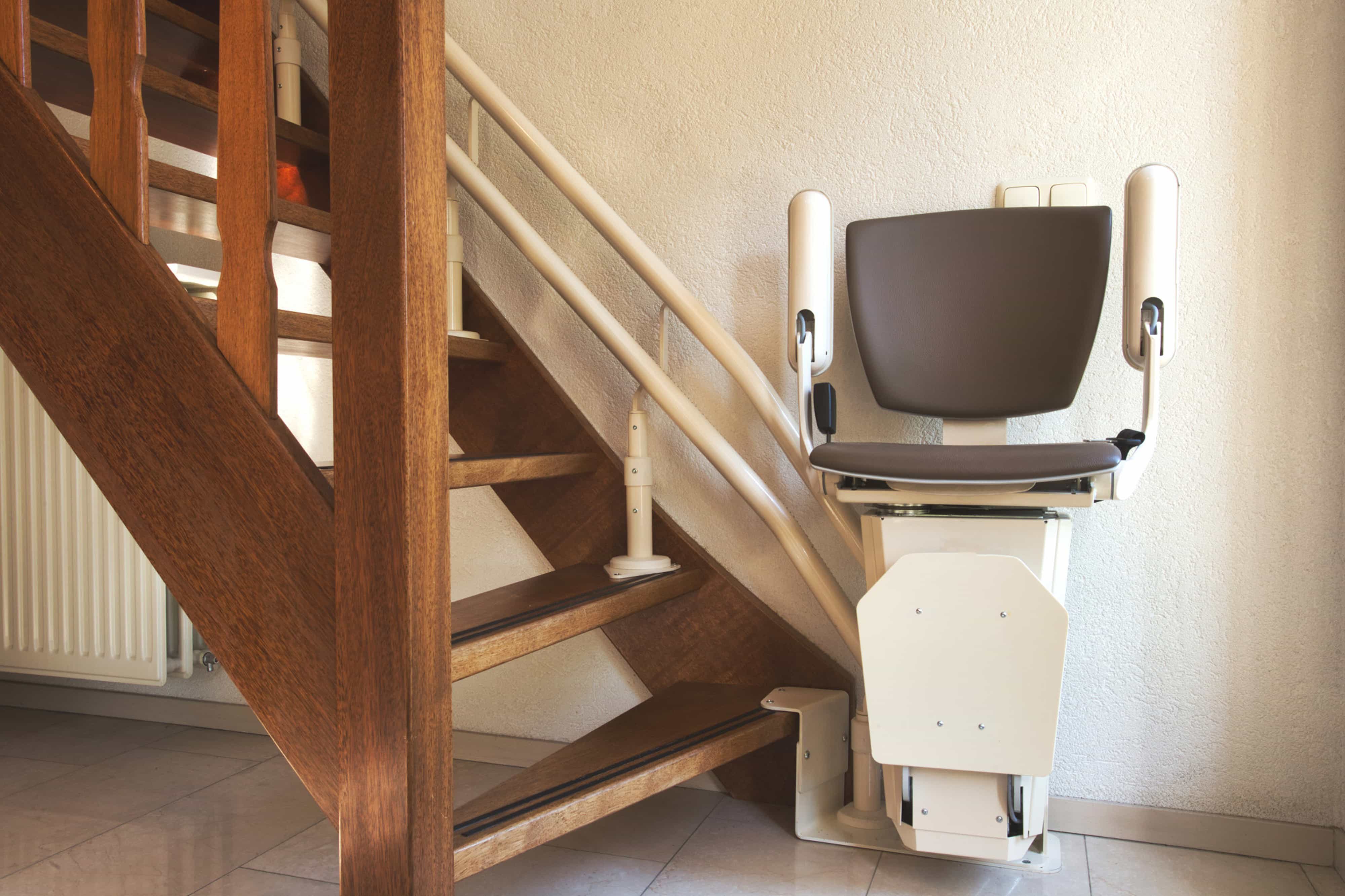
Modern stairlifts are quiet, comfortable, and unobtrusive. Battery-powered models work during power outages. Folding rails, seats, and footrests keep the staircase fully usable when the lift isn't in use. Curved staircases require custom rail manufacturing but are entirely possible. Outdoor stairlifts handle porches, deck access, and detached garages. The right pro will assess your stairs, recommend a model that fits, and complete the install in 4–6 hours.
Services
Find the right stairlift for your staircase, whether it's a straight indoor run, a curved staircase, or an outdoor porch.
Standard straight-run staircases. Most common and most affordable. Pre-built rail, fast install in 2–4 hours, available within days of order. Range $3,000–$6,000 installed.
Staircases with bends, landings, or spirals. Custom rail manufactured to match your exact staircase. 3–6 weeks to manufacture, install in 1 day. Range $10,000–$20,000 installed.
Weatherproof models for porches, deck access, and outdoor steps. Sealed motor, UV-resistant materials, weather covers. Range $4,500–$10,000 installed.
Short-term need? Monthly rentals from $250–$400 plus install. Refurbished units from $2,000 with warranty. Best for recovery from surgery or temporary mobility limits.
Buyer's Guide
Six factors decide whether a stairlift fits your home, your stairs, and the person who will use it most. Get these right and your install will last 8-12 years with minimal maintenance.
Standard residential stairlifts carry 300–350 lbs. Heavy-duty models support 400–600 lbs. Match capacity to the heaviest expected user, including winter clothing and any handheld items. Choose the next size up if you're within 25 lbs of the lower bracket; the motor will run cooler and last longer.
At the top of the stairs you must rotate the seat to dismount safely onto a landing. Manual swivel seats require strength to turn against the lock. A powered swivel rotates at the press of a button and stops automatically at preset angles, which matters most for users with limited upper-body mobility.
If the bottom of your stairs opens onto a door, hallway, or living area, a folding rail keeps the track from blocking foot traffic. Hinged rails fold up automatically when the carriage is parked at the top. Standard fixed rails work when stairs end into open floor with no obstruction below.
Every modern stairlift runs on a 24V battery pack that recharges at the top and bottom parking stations. A fully charged battery completes 8–10 round trips during a power outage. Look for motors rated under 50 decibels (refrigerator-level noise) so the lift won't wake other family members on overnight trips.
Premium models include obstruction sensors on the footrest and carriage that stop the lift instantly if a pet or shoe blocks the track. Wireless wall-mount remotes let a caregiver call the lift up or down. Seatbelt buckles should be one-handed for users with arthritis or grip weakness.
Outdoor stairlifts use sealed motors, UV-resistant upholstery, and snap-on weather covers. Don't substitute an indoor model for an outdoor staircase; warranties void in days of weather exposure. For partially covered porches, ask whether weather covers are included or sold separately ($150–$300 add-on).
Cost & Timeline
Stairlift pricing depends on staircase type (straight vs curved), length, indoor/outdoor, and features.
Straight Lift
$3K–$6K
indoor installed
Curved Lift
$10K–$20K
custom rail manufactured
Outdoor Lift
$4.5K–$10K
weatherproof rated
Monthly Rental
$250–$400
plus install & removal
Cost ranges based on 2026 industry data. Veterans may qualify for HISA grants up to $7,318. Many states offer rebates or tax credits for accessibility modifications.
Prices shown are estimates for planning purposes only and do not represent a final price. Your actual cost depends on project scope, materials, and your local market.
FAQ
No. Stairlift rails attach to the stair treads, not the wall, using anchors designed to minimize damage. When the lift is later removed, only small screw holes remain, which can be filled and stained. The staircase itself remains structurally untouched. Hardwood stairs may show light marks at anchor points but no major damage.
Most stairlifts need a minimum 27" of stair width when the seat is folded. The seat folds up to allow others to walk past. For narrower staircases, slim-profile models exist that fit on 26" stairs. A professional pre-install survey confirms fit before purchase.
Yes. Modern stairlifts run on rechargeable battery packs that charge while parked. A fully charged battery completes 8–10 round trips during a power outage. The motor is also quiet (around 50 decibels, similar to a refrigerator), so it won't disturb other rooms or sleeping family members.
Original Medicare does not cover stairlifts. Some Medicare Advantage plans, the Veterans Administration HISA grant, state Medicaid waivers, and long-term care insurance policies do offer partial coverage. Many manufacturers also offer 0% financing for 12–18 months and refurbished units cost 30–50% less than new.
A straight stairlift installs in 2–4 hours and can usually be ordered and installed within a week. Curved stairlifts require a custom rail measured to your staircase, taking 3–6 weeks to manufacture, then a 4–6 hour install. Outdoor models add an extra day for weatherproofing.
What to expect
From the first quote request to a working lift, most straight-stair installs are complete in 5–10 days. Curved staircases take 3–6 weeks because the rail is custom-manufactured.
A specialist measures your staircase, counts steps, photographs landings and obstructions, and asks about the user's mobility needs, weight, and which way they're more comfortable dismounting. The assessment usually takes 30–60 minutes and is free for most U.S. providers.
You receive a written quote within 1–3 business days listing rail length, weight capacity, swivel type, and warranty. Compare two or three quotes before signing. Ask about trade-in value if you're upgrading an old lift; many companies offer $200–$500 toward a new unit.
Straight stairlifts ship from regional warehouses in 3–7 days. Curved-rail lifts take 3–6 weeks while a custom rail is fabricated to fit your staircase's exact angles, landings, and turns. Your installer schedules a half-day window once the unit arrives.
A two-technician crew arrives, lays floor protection, anchors the rail to your stair treads (not the wall), installs the carriage, programs the controls, and tests every safety feature with weight onboard. Total install time is 2–4 hours for a straight rail, 4–6 hours for a curved rail.
The technician walks the primary user through controls, seatbelt, swivel, and emergency stop. You'll receive a 2–5 year warranty on parts plus a service contract option for annual safety inspections ($150–$300/year). Most reputable companies guarantee a 24-hour response window for service calls.